
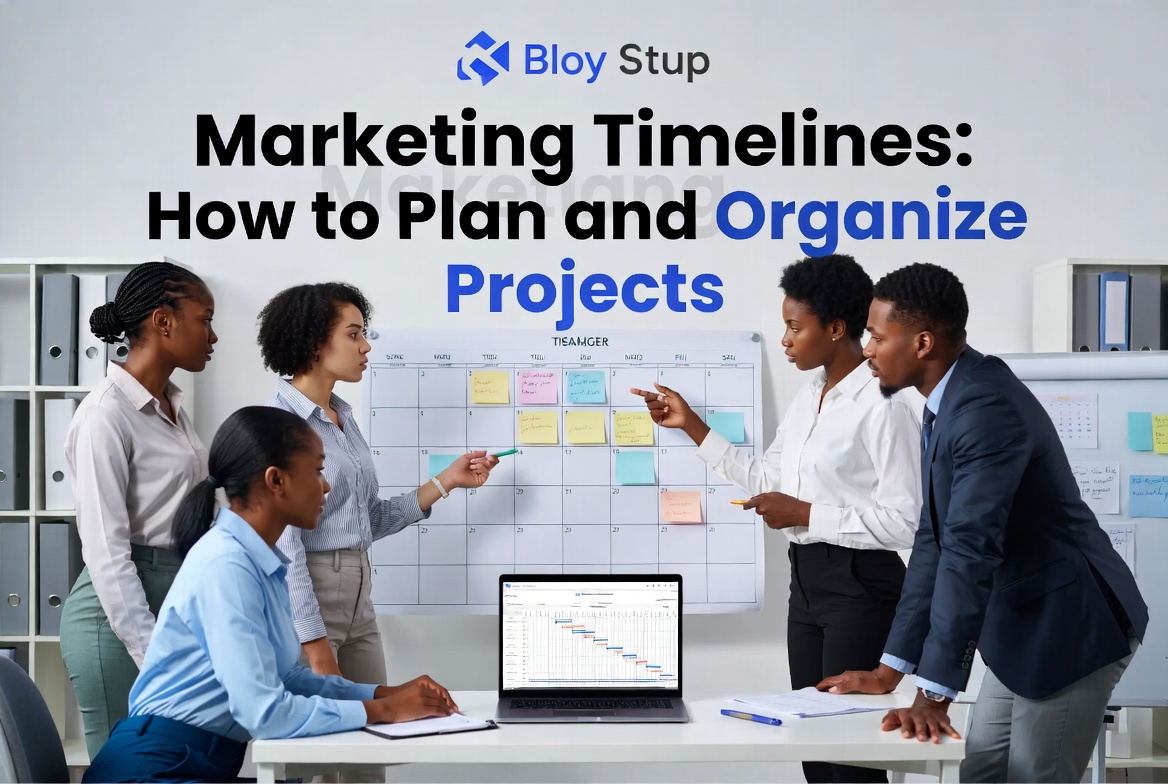


One of the biggest reasons marketing campaigns fail in Nigeria is not lack of creativity — it is poor planning.
Deadlines are missed.
Designs arrive late.
Ad copy is rushed.
Campaigns launch unprepared.
The result? Wasted budget, inconsistent branding, and poor performance.
A well-structured marketing timeline transforms chaos into clarity. It aligns your team, improves accountability, and ensures every campaign runs smoothly from idea to execution.
If you want predictable marketing results in 2026, mastering project timelines is not optional — it is essential.
Let’s break it down step-by-step.
Why Marketing Timelines Matter
Marketing timelines help you:
- Set realistic deadlines
- Allocate responsibilities
- Prevent last-minute panic
- Coordinate teams efficiently
- Track progress accurately
- Improve campaign ROI
Without a timeline, your marketing becomes reactive.
With a timeline, your marketing becomes strategic.
According to project management best practices outlined by the Project Management Institute (PMI) (https://www.pmi.org/), structured planning significantly increases project success rates. The same principle applies to marketing campaigns.
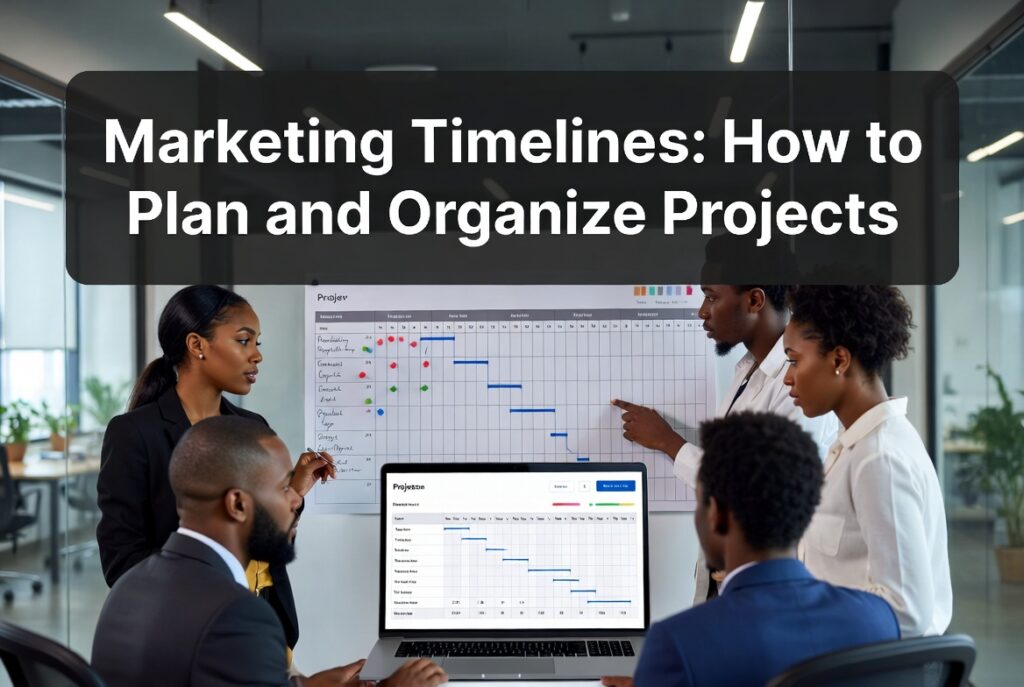
Step 1: Define Clear Campaign Objectives
Before creating a timeline, define the purpose of the campaign.
Ask:
- Are we launching a new product?
- Are we increasing website traffic?
- Are we generating leads?
- Are we building brand awareness?
Clear goals determine the timeline structure.
For example, a product launch campaign may require:
- Pre-launch teaser phase
- Launch announcement
- Paid advertising phase
- Follow-up retargeting
Without clarity, your timeline will lack direction.
For goal-setting frameworks, you can explore the SMART goal methodology explained by MindTools:
👉 https://www.mindtools.com/a4wo118/smart-goals
Step 2: Break the Project into Phases
Every marketing project should be divided into structured phases.
A typical digital marketing campaign timeline may include:
- Research & Strategy
- Content Creation
- Design & Creative Production
- Technical Setup (tracking codes, landing pages, automation)
- Testing & Quality Check
- Launch
- Monitoring & Optimization
- Reporting
Breaking projects into phases prevents overwhelm and ensures nothing is forgotten.
This approach aligns with modern marketing workflow structures recommended by HubSpot:
👉 https://blog.hubspot.com/marketing/marketing-plan-template-generator
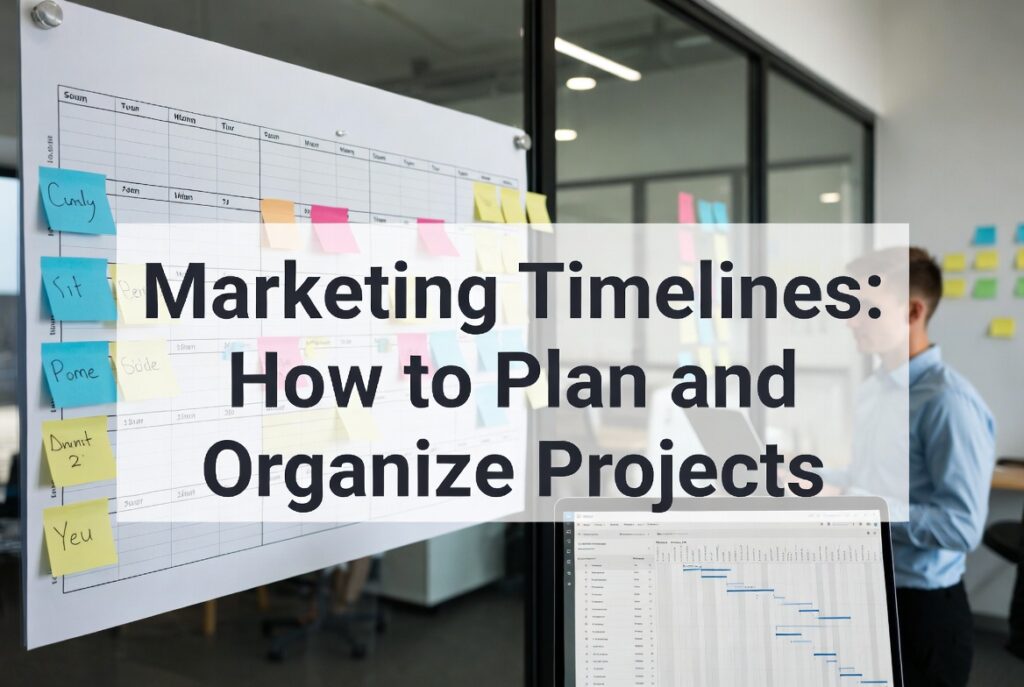
Step 3: Assign Roles and Responsibilities
A timeline without assigned ownership creates confusion.
Each task should have:
- A clear owner
- A deadline
- A measurable deliverable
For example:
- Copywriter: Submit ad copy by March 10
- Designer: Deliver creatives by March 12
- Ads Manager: Set up campaigns by March 14
- Analyst: Monitor performance daily
Using a RACI framework (Responsible, Accountable, Consulted, Informed) can improve accountability. Learn more about RACI matrices here:
👉 https://asana.com/resources/raci-chart
When responsibilities are clear, collaboration improves.
Step 4: Use Marketing Timeline Tools
Manual tracking through memory or random WhatsApp chats is risky.
Instead, use structured tools like:
1️⃣ Trello
https://trello.com/
Great for visual task boards and deadline tracking.
2️⃣ Asana
https://asana.com/
Ideal for larger teams managing multiple campaigns.
3️⃣ Monday.com
https://monday.com/
Powerful for detailed marketing project workflows.
4️⃣ Notion
https://www.notion.so/
Excellent for combining documentation and task tracking.
These tools allow:
- Real-time collaboration
- Task updates
- File sharing
- Timeline visualization
Technology removes confusion from coordination.
Step 5: Set Realistic Deadlines
One common mistake Nigerian businesses make is underestimating task duration.
Content creation takes time.
Design revisions take time.
Ad approval sometimes takes time.
Build buffer periods into your timeline.
For example:
- If design takes 3 days, allocate 5 days.
- If ads setup takes 2 days, allocate 3 days.
Realistic scheduling reduces stress and improves quality.
According to Harvard Business Review’s insights on project execution:
👉 https://hbr.org/2016/11/how-to-actually-execute-on-your-strategy
Strategic pacing increases long-term success.
Step 6: Include Review and Testing Periods
Never launch without testing.
Your timeline should include:
- Landing page testing
- Link verification
- Tracking pixel confirmation
- Email automation testing
- Creative approval
Skipping testing often leads to wasted ad spend.
Testing protects your investment.
Step 7: Monitor and Optimize in Real-Time
A marketing timeline does not end at launch.
Post-launch phase should include:
- Daily performance checks
- Weekly optimization adjustments
- Mid-campaign evaluation
- Budget reallocation if needed
Campaigns that are not monitored often lose money silently.
Data review must be scheduled into your timeline — not treated as optional.
Step 8: Conduct Post-Campaign Analysis
After campaign completion, schedule a review session.
Analyze:
- What worked
- What underperformed
- Conversion rates
- Cost per acquisition
- Audience behavior
Document insights for future campaigns.
Continuous improvement is what separates structured marketing teams from struggling ones.
Example: 30-Day Campaign Timeline Structure
Here is a simplified example:
Week 1: Research & Planning
Week 2: Content & Design Creation
Week 3: Setup & Testing
Week 4: Launch & Optimization
This structured approach prevents rushed execution.
Why Marketing Timelines Are Critical for Nigerian Businesses in 2026
As digital competition increases:
- Ads become more expensive
- Content becomes more competitive
- Customer attention becomes shorter
Only well-organized marketing teams will scale efficiently.
Marketing timelines reduce:
- Budget waste
- Team conflict
- Campaign errors
- Missed opportunities
Planning transforms marketing from chaotic activity into strategic growth.
Final Thoughts
Marketing success is not random.
It is planned, structured, executed, and optimized.
If you want your campaigns to perform better in 2026:
- Plan ahead
- Break projects into phases
- Assign responsibilities
- Use structured tools
- Test before launching
- Review performance afterward
Structure creates success.
🚀 Need Help Building Structured Marketing Systems?
If you run a Nigerian business and want to:
- Organize your marketing workflow
- Improve team productivity
- Build automated campaign systems
- Increase ROI through structured planning
Let’s build a marketing system that drives consistent results.
