
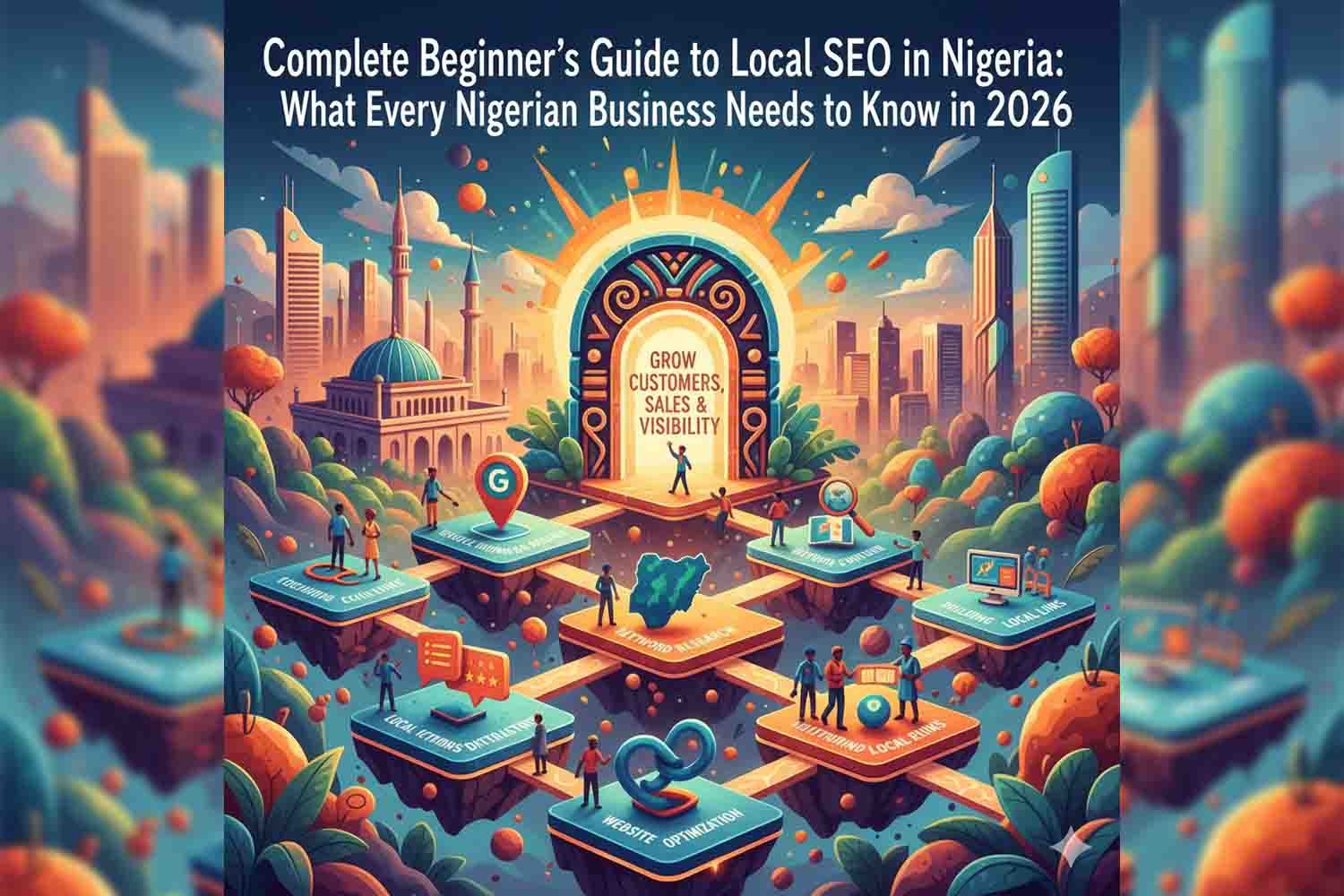

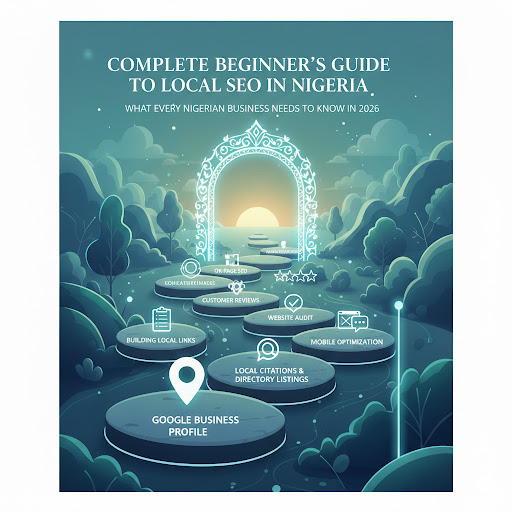
Complete Beginner’s Guide to Local SEO in Nigeria: What Every Nigerian Business Needs to Know in 2026
In 2026, the digital landscape for Nigerian businesses is more competitive than ever. If you own a restaurant in Yaba, a fashion boutique in Abuja, or a plumbing service in Port Harcourt, simply having a website isn’t enough. You need to be visible when customers in your immediate vicinity are searching for your products or services. This is where Local SEO comes in—it’s the secret sauce for attracting nearby customers and dominating your local market.
This comprehensive guide will break down everything a Nigerian business needs to know about Local SEO, ensuring you’re not just online, but discoverable.
1. What is Local SEO and Why Does it Matter for Nigerian Businesses?
Elaboration: Local SEO is the practice of optimizing your online presence to attract more business from local searches. Think of it this way: when a potential customer in Enugu searches “best bakeries near me” or “mechanic in Surulere,” Local SEO ensures your business pops up first.
For Nigerian businesses, this is crucial for several reasons:
- Mobile-First Nation: A significant percentage of Nigerians access the internet via mobile phones. Local searches (often accompanied by “near me”) are predominantly done on mobile, where proximity is key.
- Trust and Convenience: Customers prefer businesses they can easily find and visit. Local search results provide immediate, relevant options, building trust and encouraging walk-ins or quick service calls.
- Reduced Competition: Instead of competing with businesses nationwide, you’re focusing on a smaller, more relevant geographical area, making it easier to rank and capture market share.
- Word-of-Mouth Amplified: Positive local search visibility often leads to more reviews and local referrals, amplifying traditional word-of-mouth marketing.
2. Your Google Business Profile: The Cornerstone of Local SEO
Elaboration: Your Google Business Profile (GBP), formerly Google My Business, is the single most important tool for Local SEO. It’s your free business listing that appears in Google Maps and the local pack of Google search results. For Nigerian businesses, a well-optimized GBP can be the difference between obscurity and daily customers.
Key Steps:
- Claim and Verify Your Business: This is step one. Ensure your business is officially registered and verified with Google. This often involves a postcard sent to your physical address or a phone verification.
- Accurate and Complete Information: Fill out every section:
- Business Name: Exactly as it appears offline.
- Address: Your precise street address.
- Phone Number: A local Nigerian number that customers can easily call.
- Website: Link to your official website.
- Hours of Operation: Crucial for Nigerian businesses, especially those with varying schedules or public holidays.
- Categories: Choose the most specific categories that describe your business (e.g., “Nigerian Restaurant,” “Tailor,” “Auto Repair Shop”).
- Upload High-Quality Photos: Showcase your storefront, interior, products, and team. Photos of your location help customers recognize you. For Nigerian businesses, images of local landmarks nearby can be helpful.
- Write a Compelling Description: Use relevant keywords and highlight what makes your business unique in the local Nigerian context.
- Answer Questions: Engage with customers who ask questions on your profile.
- Use Google Posts: Share updates, offers, or news directly on your GBP. Announce a Jollof Rice special, a new Ankara collection, or a promo for generator repairs!
3. Local Keyword Research: Speaking Your Customer’s Language
Elaboration: Understanding what your local Nigerian customers are searching for is paramount. It’s not just “HP Toner,” but “HP Toner Delivery Lagos” or “Best HP Toner Store Ikeja.“
Strategies:
- Think Geographically: Combine your service with location modifiers (e.g., “plumber Lagos Island,” “boutique Abuja Wuse 2”).
- “Near Me” Searches: While you don’t need to add “near me” to your website content, Google understands this intent. Optimize for the core service.
- Local Landmarks/Street Names: If your business is near a well-known landmark (e.g., “Restaurant near Shoprite Festac”), incorporate this.
- Competitor Analysis: See what keywords your local Nigerian competitors are ranking for.
- Google Keyword Planner: As discussed in the previous blog, filter by your specific city or Nigeria to find relevant local search terms.
- Google Autocomplete & “People Also Ask”: These features often reveal how locals search.
4. Local Citations & Directory Listings: Building Trust & Authority
Elaboration: A “citation” is any mention of your business name, address, and phone number (NAP) online, even without a link to your website. Consistent NAP information across various online directories is a major ranking signal for Local SEO.
Key Nigerian Directories & Platforms:
- Google Business Profile: Your primary citation.
- Nigerian Business Directories: Nigeria Businesses, VConnect, Connect Nigeria, Nigerian Yellow Pages, BusinessList.
- Social Media: Facebook Pages, Instagram Business Profiles, Twitter, LinkedIn. Ensure your NAP is consistent on all.
- Industry-Specific Directories: If you’re a hotel, list on TripAdvisor; a restaurant, on FoodCritic.ng (if available), etc.
- Local Blogs/News Sites: Getting mentioned on local Nigerian news sites or community blogs can also act as powerful citations.
Consistency is Key: Inconsistent NAP data confuses search engines and can hurt your rankings. Double-check every listing!
5. Customer Reviews: Your Local Reputation Amplifier
Elaboration: In Nigeria, word-of-mouth is incredibly powerful. Online reviews are the digital equivalent. Positive reviews on your Google Business Profile, Facebook, or other platforms boost your local search ranking and, more importantly, influence potential customers.
Strategies for Nigerian Businesses:
- Actively Request Reviews: Don’t be shy! Ask satisfied customers to leave a review. A simple sign in your store or a follow-up email can work wonders.
- Simplify the Process: Provide direct links to your Google Business Profile review section.
- Respond to All Reviews: Acknowledge positive feedback and professionally address negative ones. This shows you care about your customers. For negative reviews, offer solutions or ask to take the conversation offline.
- Don’t Buy Reviews: Google’s algorithms are sophisticated and can detect fake reviews, which can lead to penalties.
6. Mobile Optimization: Essential for the Nigerian Market
Elaboration: With the vast majority of Nigerians accessing the internet via mobile devices, having a fast, responsive, and user-friendly mobile website is non-negotiable for Local SEO. Google uses mobile-first indexing, meaning it primarily looks at the mobile version of your site for ranking.
What to Check:
- Responsiveness: Does your website adapt seamlessly to different screen sizes?
- Page Speed: Use tools like Google PageSpeed Insights to check your mobile load time. Slow sites lead to high bounce rates. Optimize images, minify code, and use reliable hosting.
- Easy Navigation: Is your menu clear and easy to tap on a small screen?
- Click-to-Call Buttons: Make it easy for customers to call you directly from your website.
- Clear CTAs: Ensure your “Get Directions” or “Book Now” buttons are prominent.
7. On-Page SEO for Local Relevance
Elaboration: This refers to optimizations you make directly on your website to tell search engines (and users) what your pages are about and where you’re located.
Key Elements:
- Homepage Optimization:
- Include your full NAP in the footer of every page.
- Clearly state your services and your target locations (e.g., “Expert Web Design in Lagos, Nigeria”).
- Embed your Google Map directly on your “Contact Us” page.
- Location-Specific Pages (If Applicable): If you serve multiple cities or neighborhoods (e.g., a real estate agency with offices in Ikoyi and Victoria Island), create dedicated service pages for each location, each optimized with specific local keywords.
- Content Marketing: Write blog posts about local events, community news, or tips relevant to your Nigerian audience and services (e.g., “Best Places to Get Suya in Abuja,” “Choosing the Right Generator Repair Service in Ibadan”).
8. Building Local Links: Earning Authority in Your Community
Elaboration: Backlinks (links from other websites to yours) are crucial for overall SEO, and local backlinks are especially powerful for Local SEO. They signal to Google that other relevant local entities trust your business.
Strategies for Nigerian Businesses:
- Local Partnerships: Collaborate with complementary local businesses.
- Sponsor Local Events/Charities: Get your business mentioned on event websites.
- Guest Blogging: Write for local Nigerian blogs or online publications in your industry.
- Local PR: If you do something newsworthy, try to get featured in local news outlets.
- Supplier/Vendor Links: Ask your suppliers or partners to link to you (if relevant).
Conclusion: Dominate Your Nigerian Neighbourhood in 2026
Local SEO is an ongoing process, not a one-time fix. By consistently applying these strategies, Nigerian businesses can significantly increase their visibility, attract more local customers, and ultimately boost their revenue. Start with your Google Business Profile, focus on local keywords, gather those reviews, and watch your business thrive in your community.
